
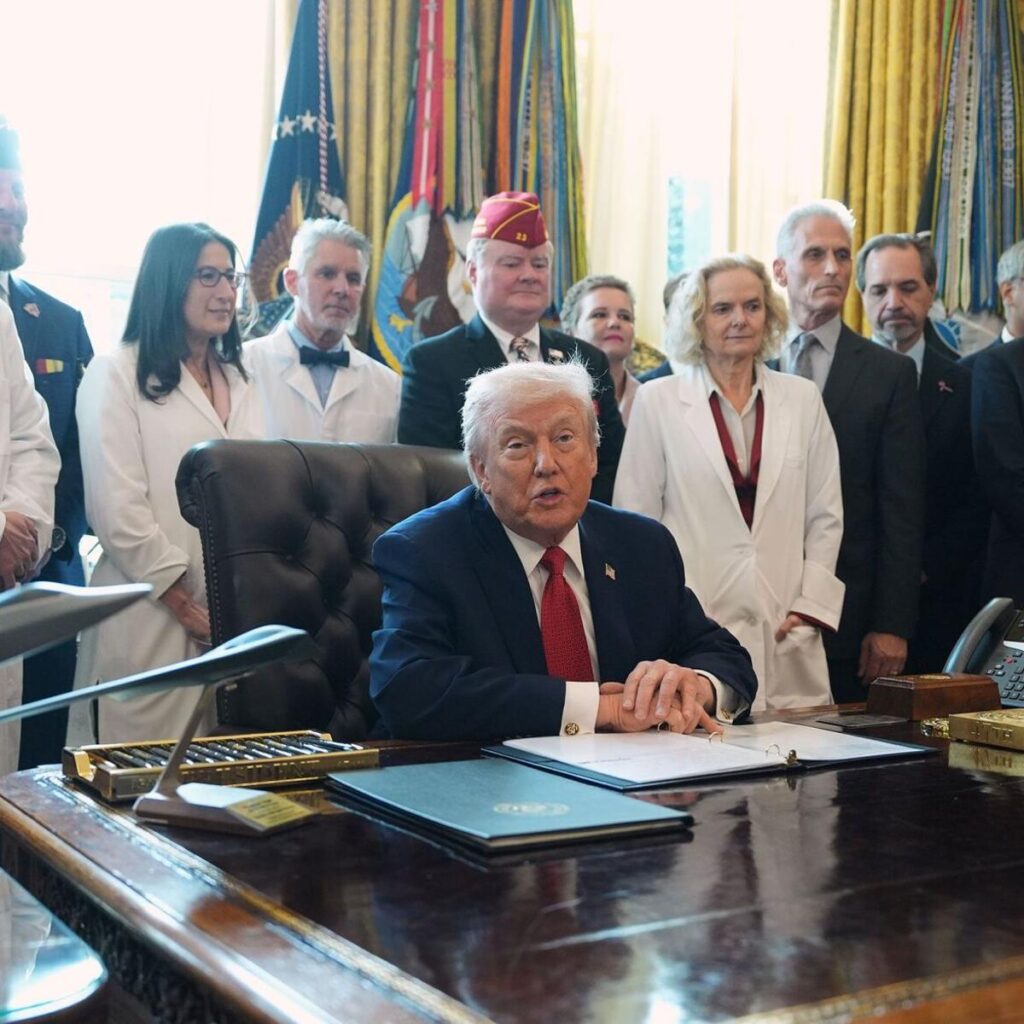
President Donald Trump signed an executive order on Thursday, Dec. 18, to push forward with reclassifying marijuana under federal law to a less restrictive category.
Trump’s order does not immediately reclassify marijuana and does not legalize recreational cannabis usage. The Trump administration is seeking to expand research on the benefits of medical marijuana for healthcare treatment, according to the executive order.
“The Federal Government’s long delay in recognizing the medical use of marijuana does not serve the Americans who report health benefits from the medical use of marijuana to ease chronic pain and other various medically recognized ailments. Americans who often seek alternative relief from chronic pain symptoms are particularly impacted,” the executive order says.
The Michigan Cannabis Industry Association cheered President Trump’s order in a press release.
“President Trump’s decision to reschedule cannabis to Schedule III is a significant win for our industry, and we are grateful for his leadership,” MiCIA Executive Director Robin Schneider said.
Michigan voters voted to legalize recreational marijuana use in 2018, but the state action did not change federal law. The state had previously legalized medical marijuana use in 2008.
Here’s what to know about Trump’s drug policy.
What did Trump do regarding cannabis?
Trump signed an executive order on Dec. 18 seeking to reclassify marijuana on the federal drug schedule from Schedule I to Schedule III, according to the White House. The move is prompted by efforts to expand medical marijuana research and use to treat health conditions, Trump said in the order.
“Forty States plus the District of Columbia have State- or locally-sanctioned, regulated medical marijuana programs. Yet decades of Federal drug control policy have neglected marijuana’s medical uses. That oversight has limited the ability of scientists and manufacturers to complete the necessary research on safety and efficacy to inform doctors and patients,” the order states.
Trump’s order builds on work started by then-President Joe Biden in 2022, when he asked the departments of Justice, and Health and Human Services to review how marijuana should be scheduled under federal law.
In 2023, the Department of Health and Human Services recommended it be rescheduled to Schedule III. The Justice Department then did its own analysis and reached the same conclusion. But then the process stalled.
What is the U.S. drug schedule?
The U.S. government divides drugs into five schedules, categories classifying the substances by their potential medical use and likelihood of being addictive, according to the U.S. Drug Enforcement Administration.
What drugs fall into which schedule?
Here are the classifications under federal law, according to the DEA:
- Schedule I: Substances with no accepted medical use, high abuse potential. Includes heroin, methaqualone, marijuana, LSD, peyote, ecstasy, and others.
- Schedule II: Substances with high potential for abuse, dangerous. Includes cocaine, hydrocodone, fentanyl, Adderall, methamphetamine, oxycodone, Dexedrine, Ritalin, hydromorphone, meperidine and methadone, and others.
- Schedule III: Substances with a moderate to low addiction potential. Includes codeine, ketamine, steroids, testosterone and others.
- Schedule IV: Substances with low potential for addiction and abuse. Includes Xanax, Soma, Darvon, Darvocet, Valium, Ativan, Talwin, Ambien, Tramadol and others.
- Schedule V: Substances with lower abuse potential, with limited quantities of narcotics. Includes cough preparations, Lyrica, Motofen, Parepectolin, Lomotil and others.
See the full list of controlled substances on the DEA website.
The Detroit Free Press contributed. Article HERE.